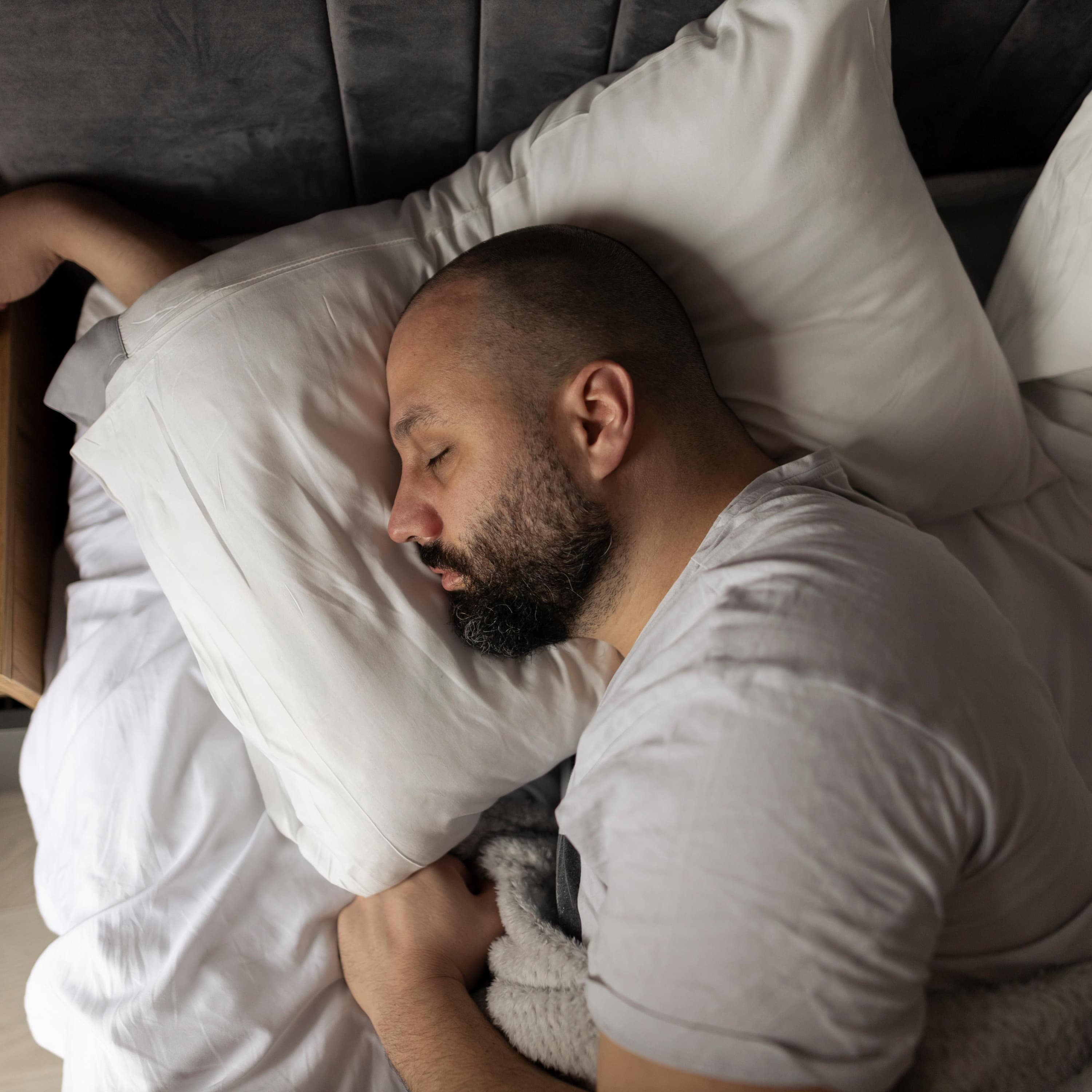
The incredible science of the sleeping brain

Loading player...
Humans have been wondering why we sleep for thousands of years. Is sleep’s purpose rest and relaxation, memory consolidation or maybe cognitive processing? In the last 15 years, scientists have discovered another possible explanation – waste disposal. In 2012 neuroscientist Maiken Nedergaard’s lab discovered that the brain has its own cleaning process, the glymphatic system, which clears away unhelpful proteins and metabolic byproducts, and only switches on at night. Since that groundbreaking discovery we’ve learned more about what drives this system and, importantly, how it could be impacting dementia. To understand more, Ian Sample talks to Prof Nedergaard about how she made the original discovery and how subsequent work is building a picture of sleep as anything but a quiet and inactive state. Help support our independent journalism at theguardian.com/sciencepod
2 Jun English United Kingdom Science · Nature

Other recent episodes

Is male testosterone in freefall?

Men’s average testosterone levels have halved over the past 50 years, according to scientists who say society is facing a male fertility crisis. Rising levels of obesity and diabetes are expected to play a part, but the team behind the work suggest that environmental factors such as endocrine-disrupting chemicals –…
9 Jul 14 min

‘A break from scrolling’: how Gen Z fell in love with birding

In the last 50 years, Britain has lost an astonishing 73 million wild birds from its landscape, according to the British Trust for Ornithology. Habitat loss, pesticides, disease, cats and the climate crisis mean there are fewer birds than ever before. For children and young people it can be difficult…
7 Jul 16 min

‘Beautiful blobs’: can scientists build life from scratch?

Researchers claim they are closer to creating life from nothing after building tiny, quivering blobs that use lab-made DNA to feed, grow and multiply in a dish. To find out how significant this step is, and where scientists hope it will lead, Madeleine Finlay hears from co-host Ian Sample and…
2 Jul 16 min

Reflecting pool algae: the science Trump needs to know

The Lincoln Memorial reflecting pool in Washington DC has hardly been out of the news since April when President Trump vowed to have it renovated, and painted ‘American flag blue’ by 4 July. Despite the pool being stripped, cleaned, coated and refilled, within days the algae that has plagued it…
30 Jun 16 min

Nature or nurture: can genes shape our behaviour?

How much do our genes determine about our lives, and could they influence traits like risk-taking, antisocial behaviour or even violence? Ian Sample talks to Kathryn Paige Harden, a behavioural geneticist and professor of psychology at the University of Texas at Austin who studies how genetic factors shape human behaviour…
25 Jun 19 min